Measurements of the efficiency of the transformer cores have been made using the NanoVNA H4.
The results are documented here:
https://www.dropbox.com/sh/y4mb9xnwbn70hll/AACghPO0l2TF4UOuJAwyAGv6a?dl=0
Measurements of the efficiency of the transformer cores have been made using the NanoVNA H4.
The results are documented here:
https://www.dropbox.com/sh/y4mb9xnwbn70hll/AACghPO0l2TF4UOuJAwyAGv6a?dl=0
The URL is ny4gefhw.com
Please take a tour and browse around.
The thirty meter band is such a "money band" for SOTA activations that it simply can't be ignored. Traditional end fed half waves either ignore it or put in a link to enable that band - e.g. the EndFedZ MountainTopper by LNR Precision (now Vibroplex).
It is possible to configure an end fed wire with two traps, one for 20m and the other for 30m. When finished, the inductive loading of the two traps shortens the antenna from 66 feet to 58 feet. The bandwidth for 20m covers the entire band. The band width for 40m is reduced but still perfectly acceptable within the CW portion of the band. There are losses associated with this trap - the combined losses from both traps is somewhere between 0.3 and 0.7 dB.
I used it during my activation of Grassy Ridge Bald W4C/EM-001 as documented by this YouTube video and it worked fantastically well with my LNR MTR4Bv2 and GM0EUL paddle.
Here is an image of the end fed half wave antenna. Only one trap is visible.

I was just going through reflection loss calculations and comparing efficient and inefficient transformers.
On 60m, inefficient transformer are only 58% efficient. Even with low SWR - say 1.5:1, the full entitlement available radiated power is only 2.78 watts.
Compare that with an efficient transformer at 83% efficiency - radiating into an SWR of 6 but matched with an ATU, the radiated power is 3.77 watts. Full entitlement with no coax losses is 4.15. one would not want to go through this exercise with an RG174 feedline as the coax losses are worse - available output down to about 2.3 watts. With very low SWR say 1.2, you are almost at full entitlement even with RG174.
So the lesson learned is - have a resonant antenna, however, in the case of mismatched antenna use the RG8X feedline instead of the RG174 and it always beats the inefficient transformer.
Having said all that, all this efficiency talk can be dominated by antenna configuration for an intended purpose. Let's say the intended purpose is to work close in chasers on 60m. An inverted V with an Apex at 20 feet has close to a 4 dBi at a high take-off angle as opposed to the same end fed wire set up as a vertical (as impractical as that may seem). The vertical will have a null at the high takeoff angle. So an efficient transformer even with low SWR will not work any stations and that inefficient transformer will work those close in stations all day long. There are a lot of factors that have to be optimized for effective antennas and as always - it always pays to begin with the end in mind and work backwards. What is the purpose, configure the antenna for that purpose and optimal gain, and then worry about SWR second and last transformer efficiency. It isn't easy. As often, summit conditions dictate antenna configuration - presence or non-presence of supports and it becomes a "one size fits all" or "one antenna configuration fits all" proposition - the ubiquitous inverted V.


Initial Prototype: The initial prototype had a turns ratio of 14:2 (14 secondary and 2 primary). It used a single 100 pF capacitor across the center conductor to ground. The tests of this initial prototype after pruning for a best compromise resulted in:
2:1 SWR Bandwidth on 40 meters is 6.730 -> 7.530 MHz with a dip to 1.3:1 SWR at 7.060 MHz
2:1 SWR Bandwidth on 20 meters is 13.910 -> 14.806 MHz with a dip to 1:1 SWR at 14.360 MHz
2:1 SWR Bandwidth on 15 meters is 21.010 -> 22.070 MHz with a dip to 1.6:1 SWR at 21.610 MHz
2:1 SWR Bandwidth on 10 meters is 29.1 -> 30.8 MHz with a dip to 1.8:1 SWR at 29.900 MHz
On 10m it is not very usable unless one has an ATU.


2:1 SWR Bandwidth on 40 meters is 6.820 -> 7.510 MHz with a dip to 1.3:1 SWR at 7.150 MHz
2:1 SWR Bandwidth on 20 meters is 13.990 -> 14.840 MHz with a dip to 1:1 SWR at 14.430 MHz
2:1 SWR Bandwidth on 15 meters is 20.950 -> 22.270 MHz with a dip to 1.1:1 SWR at 21.650 MHz
2:1 SWR Bandwidth on 10 meters is 29.1 -> 30.8 MHz with a dip to 1.3:1 SWR at 29.900 MHz
Being a link dipole for 30m - here are the results for 30m:
2:1 SWR Bandwidth on 30 meters is 9.730 -> 10.880 MHz with a dip to 1.0:1 SWR at 10.280 MHz with a SWR between 1.3 and 1.2:1 from 10.100 to 10.150 MHz
A third prototype had the following results (identical in construction to the second one) with the following results.
2:1 SWR Bandwidth on 40 meters is 6.820 -> 7.500 MHz with a dip to 1.3:1 SWR at 7.150 MHz
2:1 SWR Bandwidth on 20 meters is 13.980 -> 14.850 MHz with a dip to 1:1 SWR at 14.440 MHz
2:1 SWR Bandwidth on 15 meters is 20.780 -> 22.280 MHz with a dip to 1.2:1 SWR at 21.600 MHz
2:1 SWR Bandwidth on 10 meters is 24.5 -> 29.9 MHz (which actually overlaps into 12 meters) with a dip to 1.1:1 SWR which is wide - 28.0 to 28.5 MHz so 10 meters is now perfectly usable without a tuner and so is 12m which is a very narrow band.
This is one heck of an antenna - requiring no tuner on 40m, 20m, 15m, 12m and 10m and power handling ability as follows SSB 60w, CW - 40w and Digital (key down) - 30w.
The final product:

This DXpedition took place between late February and early March 2020 just before the pandemic hit with full force. Because of the pandemic, the major DXpeditions have been cancelled. The one going to Midway was one I was looking forward to but became victim to the pandemic. The last major one I was able to work was VP8PJ and I was able to make contact on 30m CW. Between the sunspot minimum and the effects of the pandemic - I will likely be stuck on #315 for a long while.

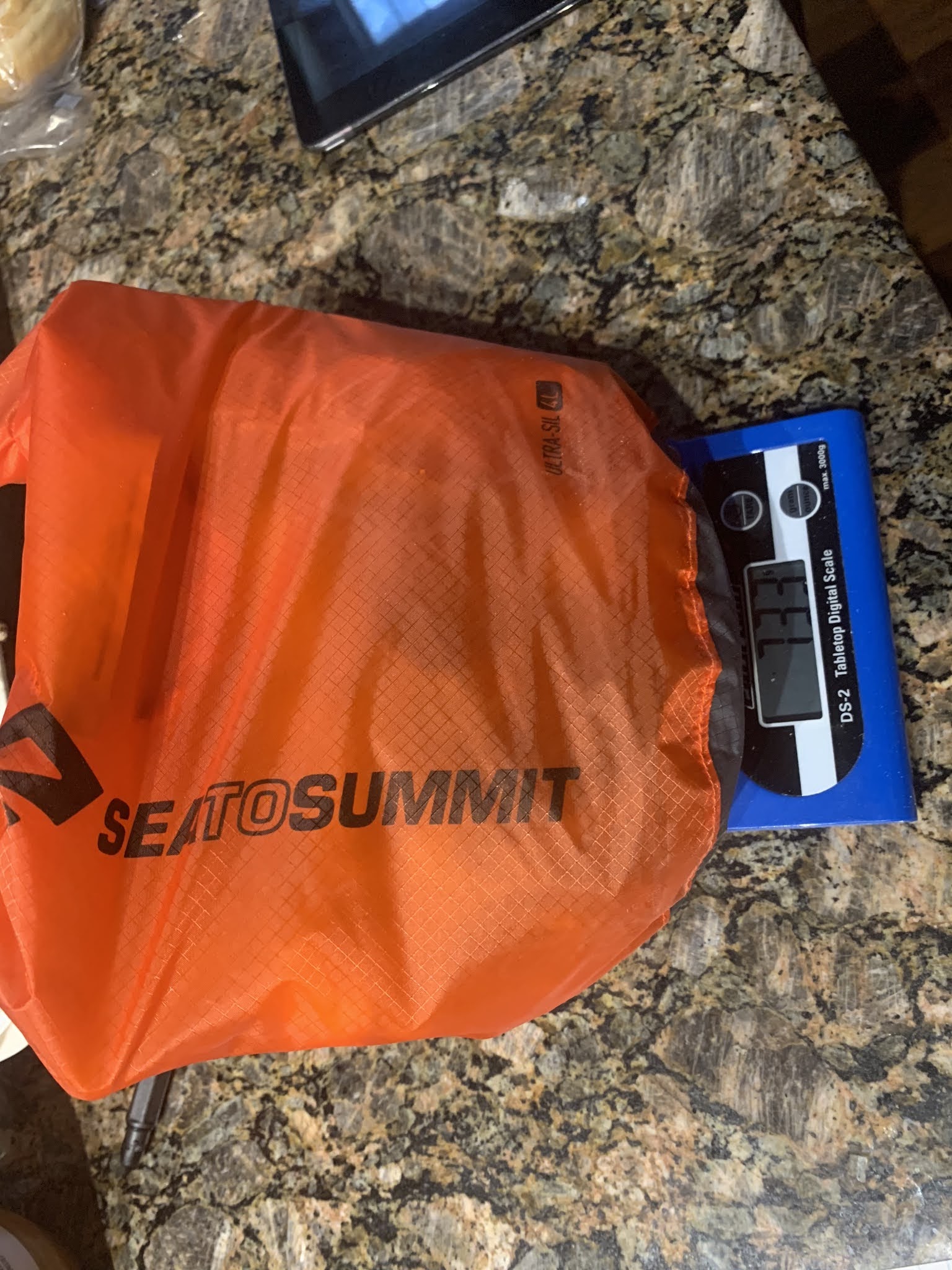
For backpacking where minimalism is important to me, my go to radio is the LNR MTR3B Mountain Topper. The radio itself weighs 174 grams. WG0AT has repackaged his into a clear lid tin that only weighs 120g. With the battery and the key made GM0EUL, the whole set up weighs less than a pound.